
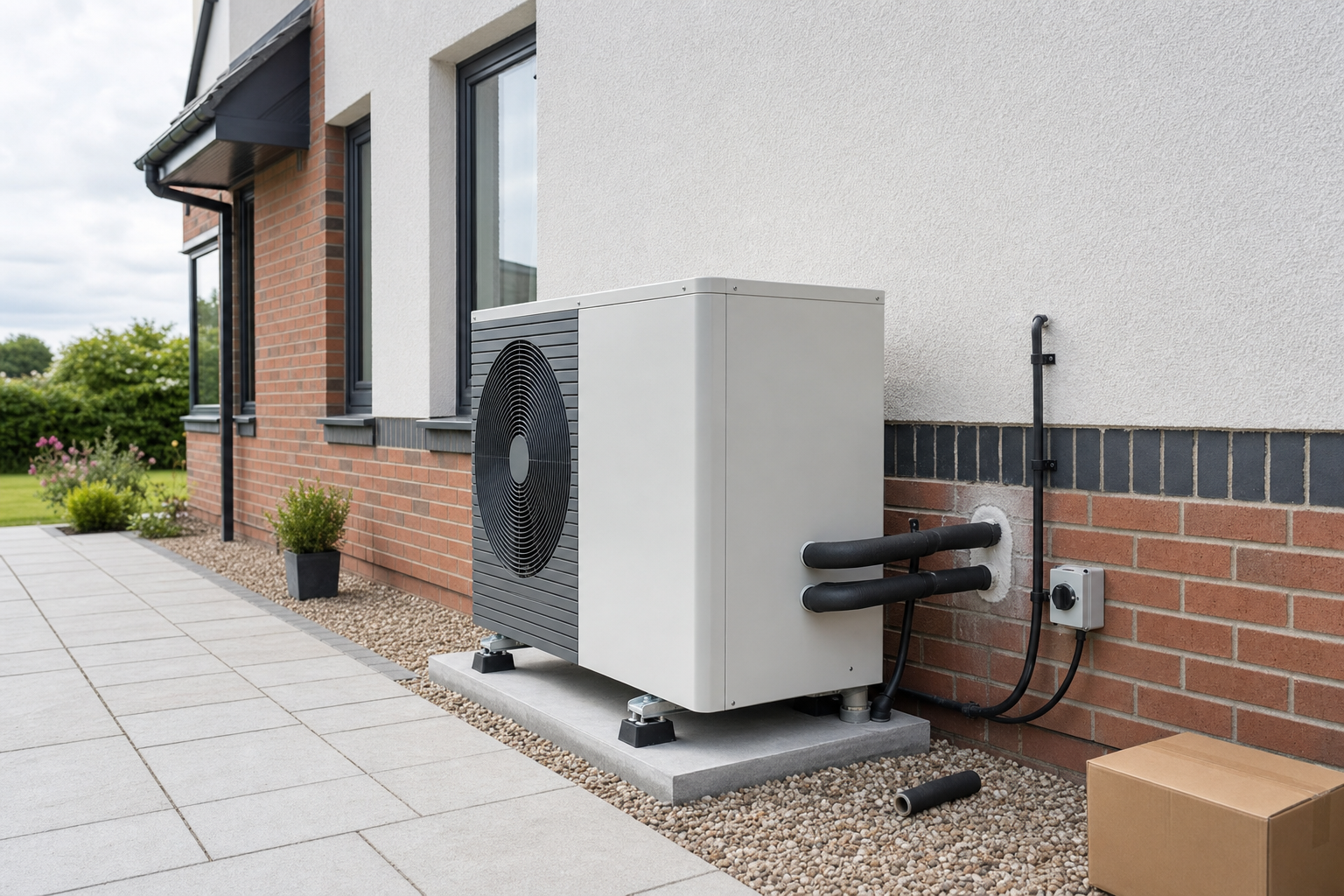
What makes a heat pump work well
Heat demand assessed properly
Design starts with how the property loses heat, not guesswork.
Lower flow considered early
Emitter sizing and system layout are judged for real comfort levels.
Whole-system planning
Radiators, hot water and controls are reviewed alongside the heat pump.
Start with the property, not just the unit
A heat pump works best when the whole heating system is designed around it, not when it is treated as a swap-and-hope replacement for a boiler. We are qualified to carry out heat pump installations, and the first step is always understanding the property properly. We look at heat demand, insulation, available outdoor or plant space, existing radiators or underfloor heating, hot-water storage and electrical provision before a system is specified. That matters because heat pumps run at lower flow temperatures than many traditional systems, so emitter sizing and overall design have a direct effect on comfort and performance. When you choose Taylor Plumbing and Heating, the conversation starts with how the house loses and uses heat, not just with the unit itself.

A full design route with clear early expectations
The job then moves through property assessment, system specification, equipment positioning, hydraulic connections, controls, commissioning and clear user guidance. Some homes need radiator changes, control upgrades or adjustments to hot-water arrangements to get the best from the design, and we will explain that plainly from the start. Useful first details include room layouts, existing heating information and any recent insulation work. Choosing Taylor Plumbing and Heating means you get a heat pump plan grounded in the reality of the property, which is much better than discovering halfway through that the system needed wider changes all along.
Frequently asked questions
Is a heat pump a direct swap for any old boiler?
Not always. Heat pumps work at lower flow temperatures than many boiler systems, so radiators, controls and hot-water arrangements sometimes need adjusting. We assess the wider system first so the finished setup has a fair chance of working well.
What details help with an initial heat pump assessment?
Room layouts, current heating information, hot-water setup, insulation details if known and photos of key equipment areas all help. That gives us a stronger starting point before discussing the property in more detail.
Can existing radiators stay with a new heat pump?
Sometimes yes, sometimes not. It depends on whether the current emitters can deliver enough heat at the lower flow temperatures a heat pump uses. We assess that early and explain any changes that may be needed for comfort and performance.