
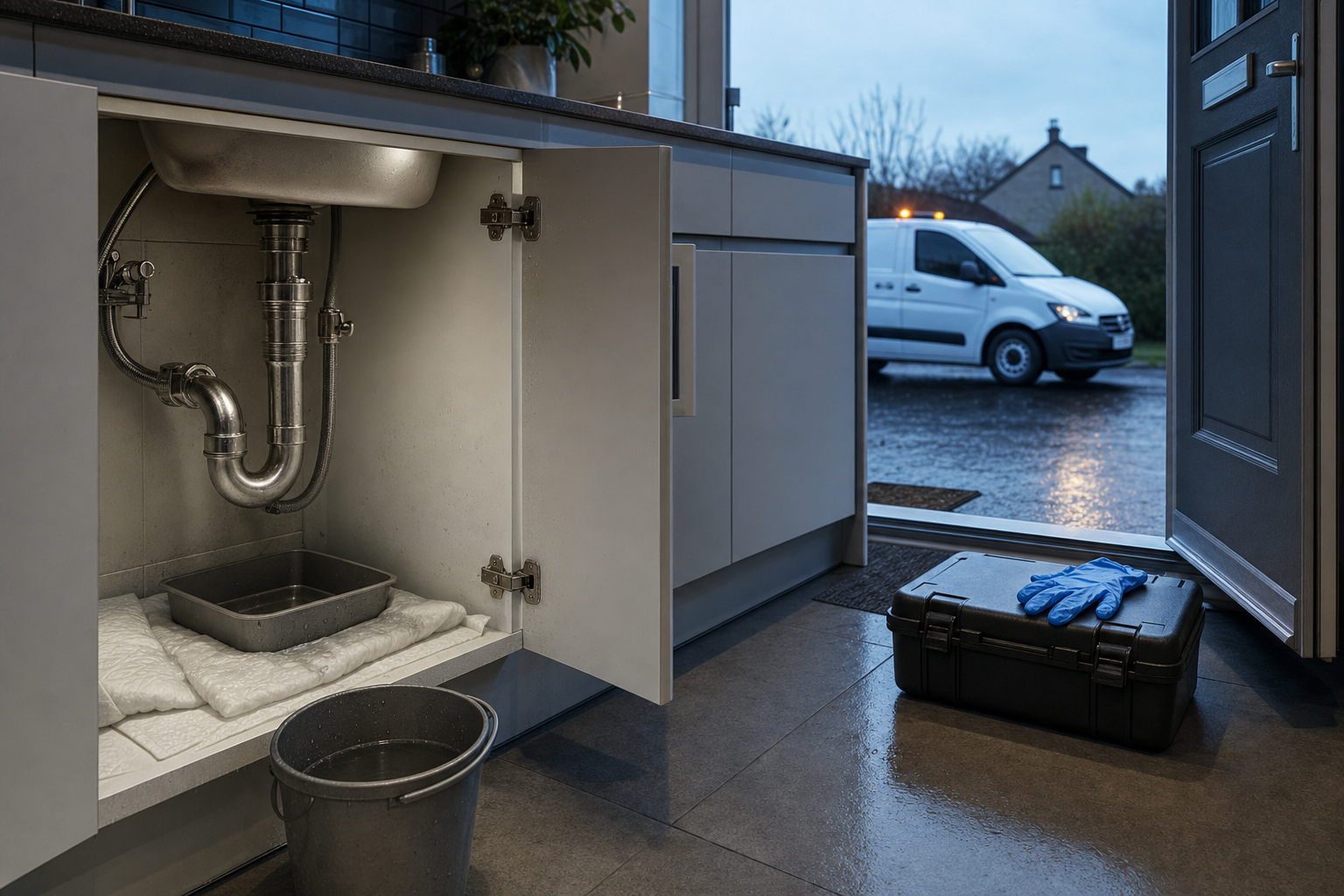
What helps when a leak will not wait
Fast first steps
We guide you on isolation and damage control before we even arrive.
Make-safe action on site
Urgent work focuses on stopping the problem getting worse straight away.
Clear advice under pressure
You know what has been contained and what follow-on repair still remains.
First priority: make the problem safe
Some plumbing problems can wait until morning. A burst pipe, an overflow that will not stop or water creeping towards electrics is not one of them. We provide 24/7 call-outs for urgent domestic plumbing problems and start with a phone assessment, because the first few minutes matter. We will ask what fixture is affected, whether water is still flowing and if you can reach the stop tap safely, then talk you through any sensible steps to limit damage before we attend. When you call Taylor Plumbing and Heating, the priority is simple: make the situation safe, contain the leak and stop the house taking more of a soaking than it already has.
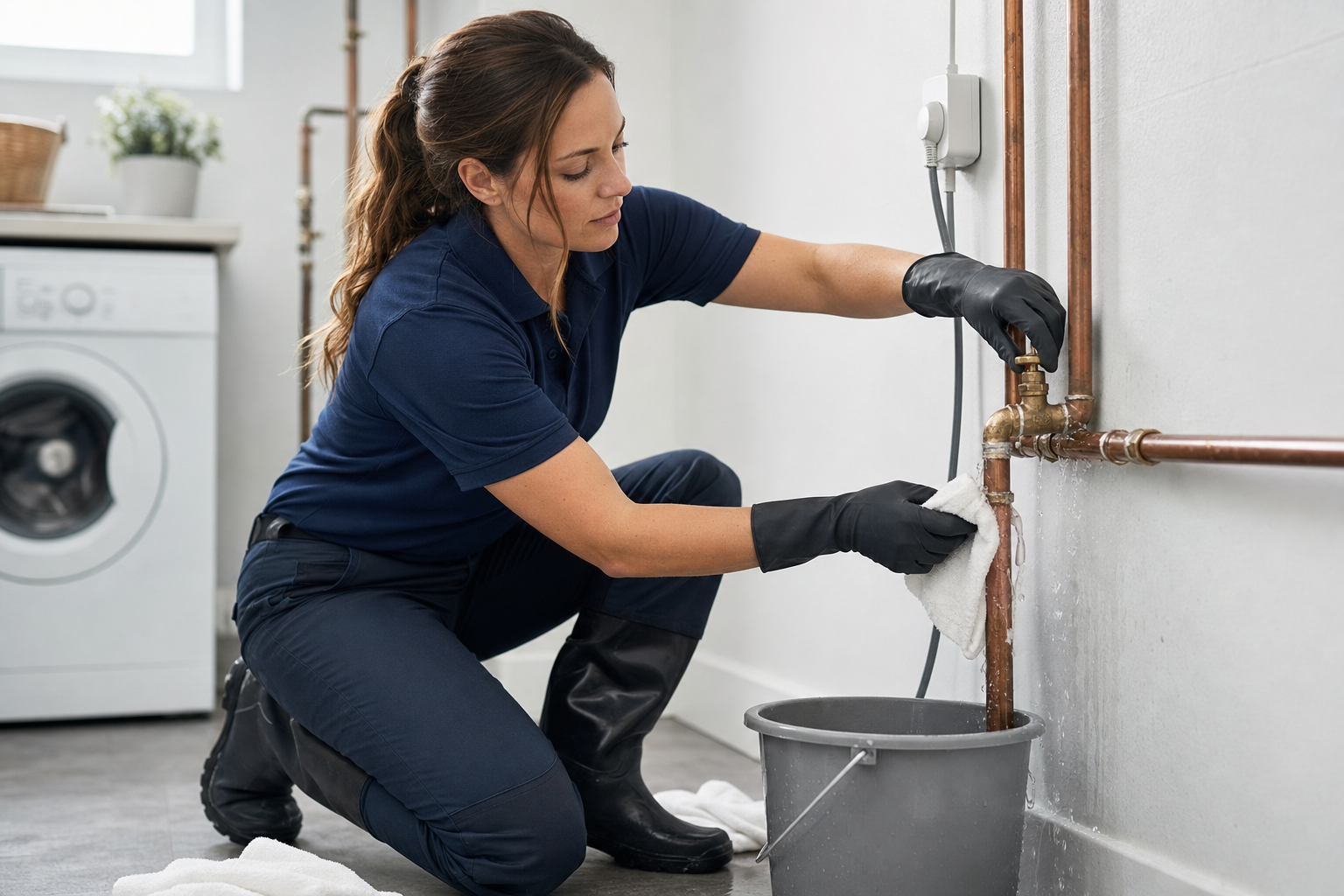
Containment first, permanent repair when clear
Emergency work often happens in two stages. The first is immediate containment, such as isolating the supply, securing the failed section or carrying out a make-safe repair. The second may be permanent follow-on work once the source and full extent of the damage are clear. We will explain that difference plainly, so you know whether the job is fully resolved or needs a return visit. If water is escaping near electrical equipment, tell us straight away and keep clear until we advise you. Through Taylor Plumbing and Heating, you get calm guidance when things are messy, which is usually when calm guidance is most useful.
Frequently asked questions
What counts as a plumbing emergency?
Burst pipes, uncontrolled leaks, overflowing fixtures, failed toilets, loss of water supply and water escaping near electrics are all good reasons to call. If waiting is likely to worsen damage or leave the property unsafe, it is worth treating as urgent.
What should I tell you when I call?
Tell us what is leaking or overflowing, whether water is still flowing, which rooms are affected, if you know where the stop tap is, and any access details we need. That helps us guide you on the safest first steps before we attend.
Do you always carry out the permanent repair straight away?
Not always. In some emergencies, the first job is to isolate the problem and make the system safe. Once the source and full extent are clear, we can explain any permanent repair that still needs doing and the best way to arrange it.